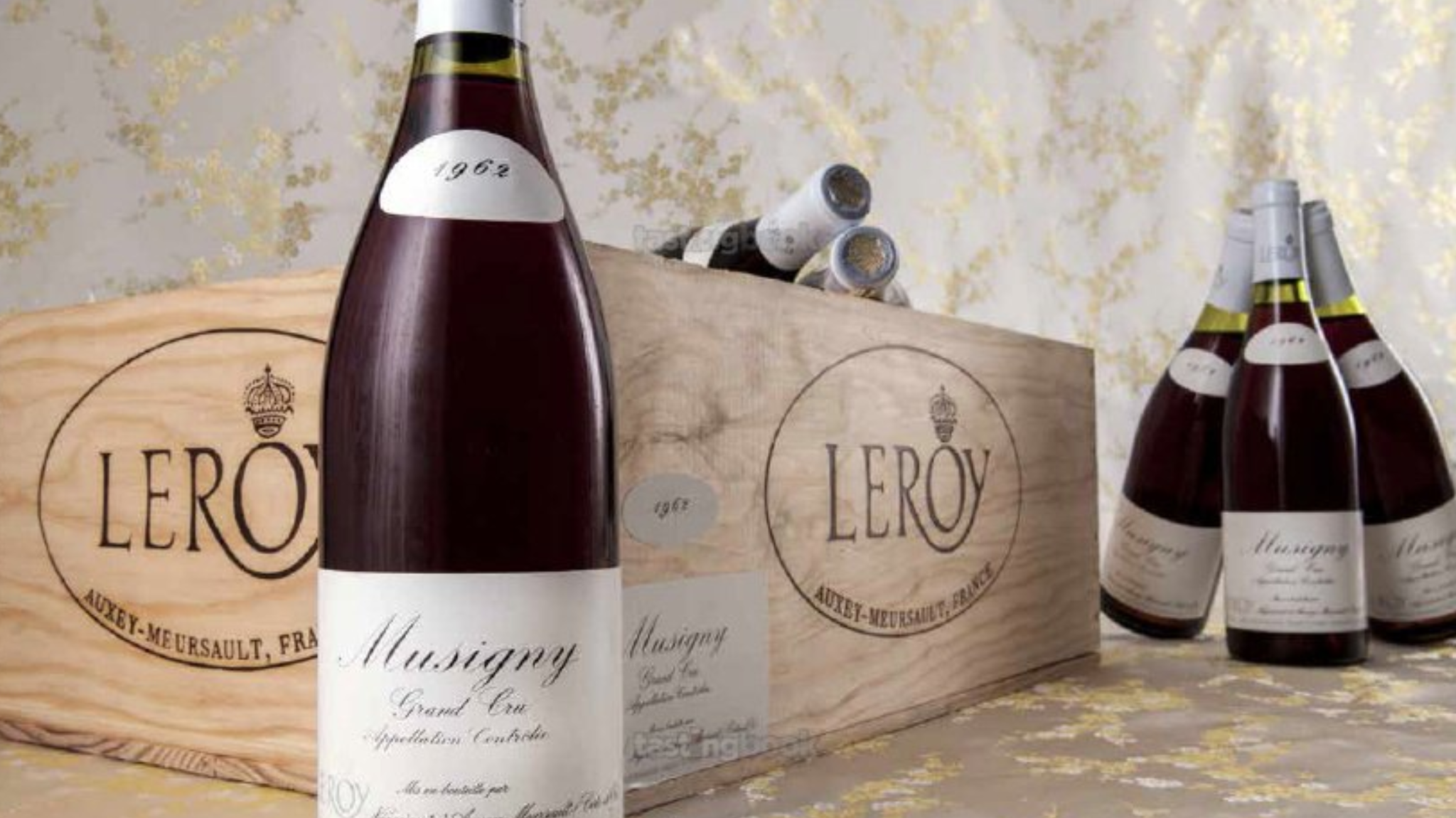
There are vineyards in Burgundy that carry a kind of quiet gravity. Musigny is one of them.
Set above Chambolle-Musigny in the Côte de Nuits, this Grand Cru has long been spoken about with a particular reverence, not because it is showy, but because it is so consistently associated with elegance. Musigny is often described as the most refined expression of Pinot Noir, a wine that can hold both power and lightness at once, without forcing either.
In short: Musigny is a tiny Grand Cru vineyard in Chambolle-Musigny, revered for Pinot Noir of extraordinary finesse, and, more rarely, for white Musigny made from Chardonnay.

Musigny is small, just over ten hectares, but its reputation far exceeds its size. Its east-facing position and limestone-rich soils create wines that feel structured yet weightless, as though the vineyard has mastered the art of restraint. This is Burgundy at its most composed: detail over drama, line over volume.
What makes Musigny so distinctive is its ability to combine intensity with grace. The wines can be deeply concentrated, but they rarely feel heavy. Instead, they move across the palate with a silk-like ease, floral, spiced, and layered, with a finish that seems to linger long after the glass is empty.

Musigny also has history on its side. Records of viticulture here stretch back centuries, and the name itself is thought to be tied to an old Burgundian family. Like so much of Burgundy, Musigny is a story of continuity, land tended, seasons repeated, and reputation built slowly over time.
Today, Musigny is divided among a small number of producers, each offering a slightly different interpretation of the vineyard’s character. Some names appear again and again in any serious conversation about Musigny, estates whose wines have helped define what the vineyard can be at its best.
Among them, Domaine Comte Georges de Vogüé is often treated as a reference point: Musigny with authority, structure, and longevity. Domaine Leroy remains one of the most coveted, rare, intense, and almost mythical in the fine wine world. And Domaine Jacques-Frédéric Mugnier, more delicate in expression, is often admired for clarity and precision.

Then there is white Musigny, one of Burgundy’s quiet oddities.
Although Musigny is celebrated for Pinot Noir, the appellation is also permitted to produce white wine, and in exceptional hands, white Musigny can be extraordinary: rich yet mineral, generous yet disciplined, with a sense of seriousness that feels unmistakably Grand Cru. It remains extremely rare, which only adds to its allure.
Musigny is not a wine you drink casually, not because it requires ceremony, but because it rewards attention. It is at its most compelling when there is time to let it open slowly in the glass, and when the evening is unhurried enough to notice the way it changes.
If you are lucky enough to drink a bottle, the best approach is often the simplest: serve it slightly cool, use generous glassware, and allow it to reveal itself naturally rather than pushing it to perform.

Musigny’s place in the world of fine wine is secure not because it is fashionable, but because it is enduring. It represents Burgundy in its most persuasive form: the idea that luxury is not volume or excess, but detail, the kind you can only notice when you slow down.
To taste Musigny is to taste Burgundy at its most graceful.


